
POPCORN CEILING REMOVAL
POPCORN CEILING REMOVAL in Greenville, SC.
Nothing dates a house faster than a ceiling that looks like cottage cheese. It collects dust, yellows over time, and makes an otherwise updated room feel 20 years behind. Spartan Painting Services removes textured ceilings across Greenville, SC and leaves a smooth surface behind.


THE SCRAPING IS THE EASY PART.
Anyone with a spray bottle can knock texture off a ceiling. What comes next is the work: the seams that were never properly finished under the texture, the fastener heads that appear, and the patched areas nobody bothered to blend. We plan for all of it, because a scraped ceiling is a rough ceiling until it is skimmed, sanded, and primed.
Containment comes first, always. Floors, walls, and doorways are sealed so a ceiling project stays a ceiling project instead of a whole-house cleanup.
- Asbestos testing recommended on any pre-1980 ceiling
- Full floor, wall, and doorway containment before scraping
- Seams, fasteners, and old patches refinished after removal
- Skimmed, sanded, and primed to a paint-ready surface
POPCORN CEILING REMOVAL
SMOOTH CEILINGS MAKE EVERY ROOM FEEL TALLER.
Texture absorbs light and breaks it up. Take it away and the ceiling reflects instead, which brightens the room and makes the walls read higher without a single structural change. It also removes a dust magnet that no amount of cleaning ever truly handles. Most people describe the difference as the room feeling newer, without being able to name exactly what changed.
OLDER GREENVILLE HOMES NEED TESTING FIRST.
Sprayed texture was common through the 1970s, and material applied before the mid-1980s can contain asbestos. Testing is quick and inexpensive, and the result determines everything: a straightforward removal or a job that belongs with a licensed abatement contractor. We will not scrape an untested ceiling of that age, and we would rather lose the work than guess about it.
10+ YEARS OF CEILING REMOVALS.
Enough ceilings to know that a house built in 1968 hides different problems than one from 1994, that painted-over texture behaves completely differently from unpainted, and that some ceilings are better skimmed over than scraped. We tell you which one you have before we start, along with what it means for the schedule. Ready to find out what is above you?
WHAT A SMOOTH CEILING GIVES BACK
A BRIGHTER ROOM
Flat ceilings reflect light instead of scattering it into shadow across a bumpy surface, so your existing fixtures do more work and the whole space feels far less closed in after dark.
LESS DUST OVERHEAD
Textured surfaces hold dust, cobwebs, and cooking residue that cannot be wiped away without damaging them. A smooth ceiling cleans with a simple duster and stays visibly cleaner between times.
A MORE CURRENT HOME
Buyers read popcorn as a house untouched since the 1970s. Removing it repositions the entire room as updated, often for considerably less than the cost of new flooring in that same space.
EASIER REPAIRS AHEAD
Future light fixtures, ceiling fans, and small patches blend invisibly into a smooth surface. Matching sprayed texture around a newly installed fixture is a job that almost never looks right afterward.
NO MORE FLAKING
Aging texture sheds onto furniture and floors, especially near vents, doorways, and anywhere air moves. Removing it ends the shedding permanently rather than sealing it under yet another coat of paint.
BETTER ACOUSTICS THAN EXPECTED
Popcorn was originally sold as sound control, but modern insulation and soft furnishings do far more. Losing the texture rarely changes how a room sounds and always changes how the room looks.
WHAT WE REMOVE
OUR CEILING REMOVAL WORK.
Six situations cover almost every textured ceiling we are called about. The right approach depends on age, whether the texture was painted, and what condition the board underneath is in.

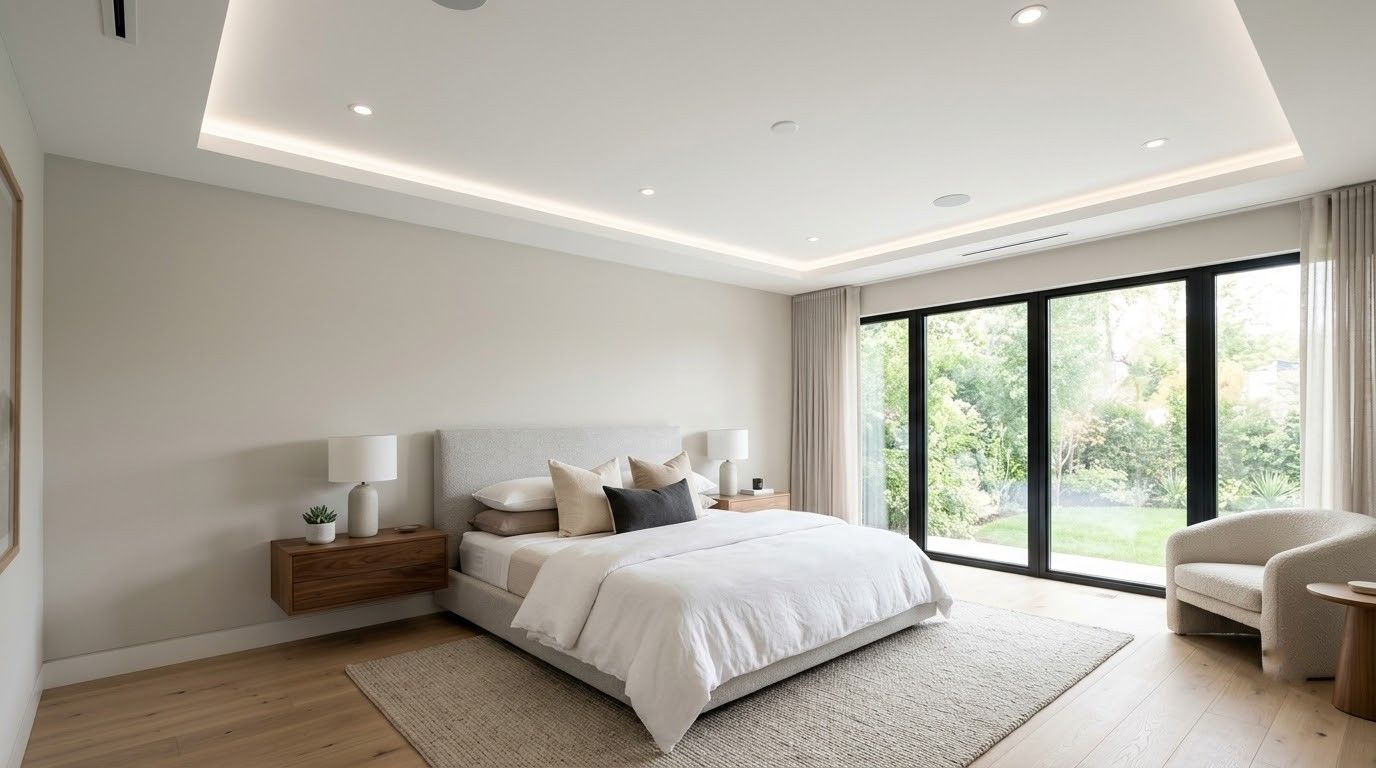
MAIN ROOMS
Living Room and Bedroom Ceilings
The most requested spaces, and the ones where lighting shows the results most clearly. Furniture is moved out or fully wrapped and the room is sealed off before any water gets sprayed overhead.
PAINTED OVER
Painted Popcorn Ceiling Removal
Paint seals the texture against water, so scraping becomes considerably harder and slower. These ceilings are often better skimmed smooth with compound, and we recommend that route whenever it produces the better outcome.

WHOLE FLOOR
Multi-Room and Whole-Home Removal
Doing every room at once means one containment setup, one dust event, and one cleanup at the end. It costs less per room and puts the entire disruption behind you in a single stretch.
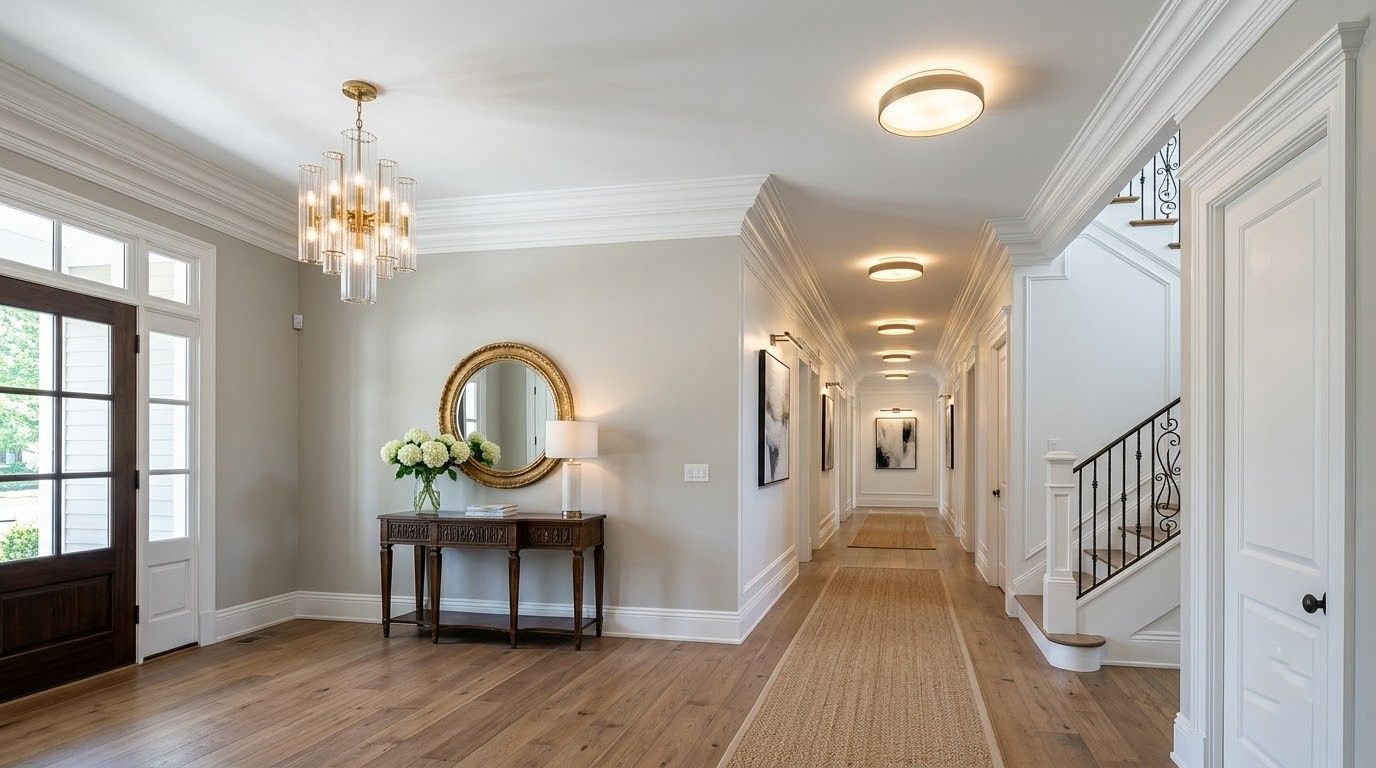
AFTER SCRAPE
Seam Repair and Skim Coating
Removal almost always exposes taped joints and fastener heads that were never properly finished underneath. Reskimming and sanding those areas is exactly what makes the finished ceiling look deliberate rather than stripped.
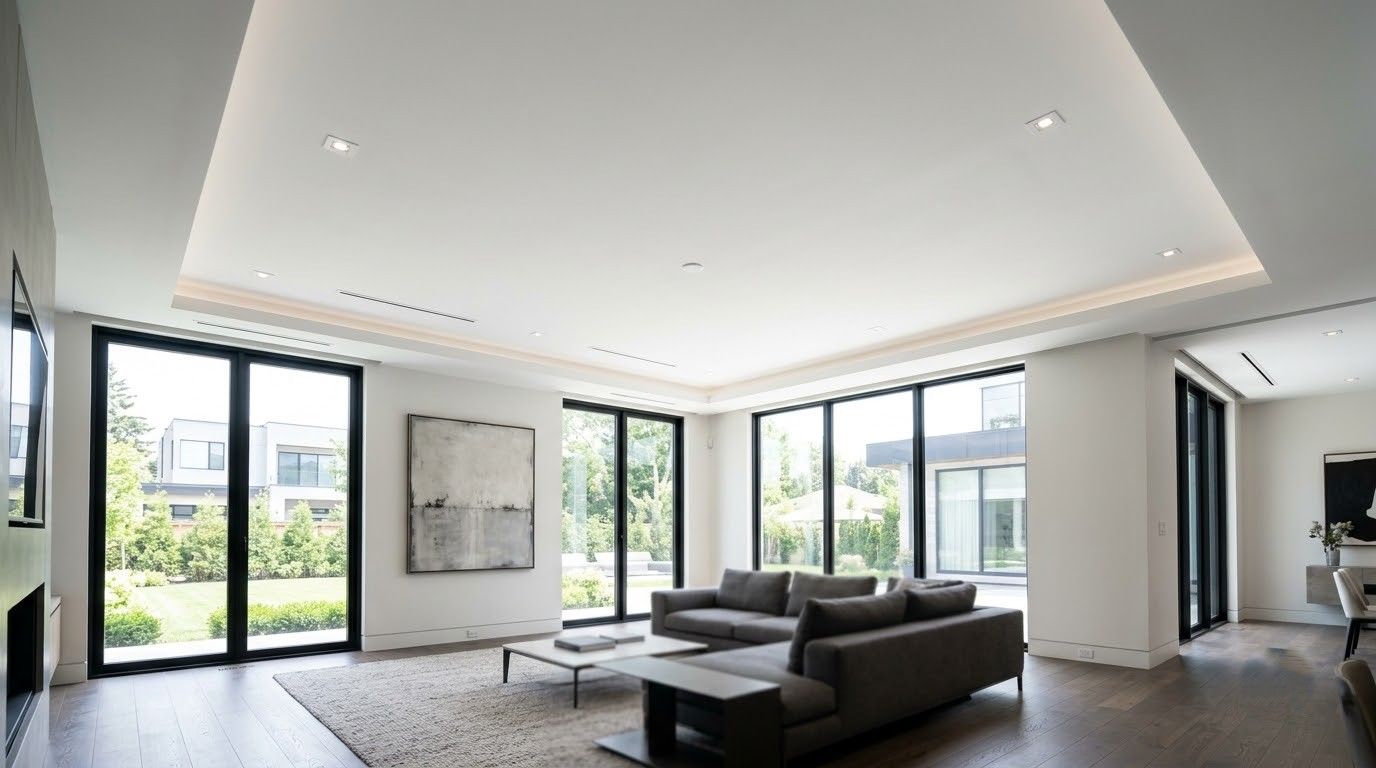
TALL SPACES
Vaulted and Two-Story Ceilings
Height changes the equipment and the risk involved, not the underlying method. Scaffolding and careful staging let us safely reach stairwell and great room ceilings that ordinary ladders cannot serve at all.

FINAL COAT
Ceiling Priming and Painting
A flat ceiling paint applied over dedicated primer completes the job properly. Doing it while containment is still standing means no second setup and no dust settling onto the fresh finish.
Common Questions
frequently asked
questions.
Textured ceilings raise questions about safety, mess, cost of time, and whether the effort is worth it at all. These are the ones asked before nearly every project we take on.
Does a popcorn ceiling need to be tested for asbestos?
If it was sprayed before the mid-1980s, yes. Testing through a certified lab is quick and inexpensive, and the result decides whether removal is straightforward or requires a licensed abatement contractor.
Is removing a popcorn ceiling worth it?
For most homes, yes. It brightens rooms, removes a dust collector, and is one of the few updates buyers notice immediately. Spartan Painting Services handles it constantly in Greenville, SC.
How messy is popcorn ceiling removal?
Genuinely messy without containment and quite manageable with it. Plastic on floors, walls, and doorways catches nearly everything, and wetting the texture first keeps material falling in clumps rather than dust.
Can you remove popcorn texture that has been painted?
It can be done, but paint blocks the water that softens the texture. Skim coating over the painted surface often gives a better result faster, and we will say which applies.
How long does popcorn ceiling removal take?
A single room takes 1 to 2 days including skimming and sanding. A whole house runs closer to a week, since each compound coat needs to dry fully before sanding.
Do I need to move out during the work?
No. Rooms are sealed off individually and handed back when finished, so the rest of the house stays in use. Clearing furniture from the room beforehand speeds things up considerably.
What is underneath a popcorn ceiling?
Standard drywall with taped joints, usually finished only to a low level because texture was going to hide it. That is exactly why skim coating after removal is part of the job.
Should I remove it or cover it with new drywall?
Removal is usually cheaper and does not reduce ceiling height. Covering makes sense for badly damaged substrates. After 10+ years in Greenville, SC, Spartan Painting Services recommends removal in most homes.
We Measure the Opening
STEP 02
Our team takes accurate field measurements of the existing opening, frame, and threshold, since even small discrepancies can cause ordering errors or installation delays later in the process.
HOW WE WORK
FROM TESTED TO SMOOTH AND PAINTED, HERE IS HOW.
STEP 01
Check the Age and Test
We establish when the texture was originally applied and arrange asbestos testing on anything old enough to warrant it. No scraping begins in your home until that laboratory result is back in hand.
STEP 02
Seal the Room Completely
Floors, walls, doorways, and air vents are covered in plastic, and light fixtures are removed or bagged. Containment here is built to hold wet material, not simply the fine dust that sanding creates.
STEP 03
Wet and Scrape the Texture
The ceiling is misted so the texture releases in soft clumps instead of clouds of dust. Scraping is done in overlapping passes, with care taken not to gouge the paper face hidden underneath.
STEP 04
Repair What the Scrape Reveals
Exposed seams, fastener heads, and old patches are taped and coated properly. This is the stage that separates a genuinely smooth ceiling from one that has simply lost its texture and nothing more.
STEP 05
Skim, Sand, and Inspect
A skim coat evens out the whole plane, then careful sanding brings it completely flat. Raking light confirms the surface before anything gets primed, because ceilings show every remaining flaw once the lights go on.
STEP 06
Prime, Paint, and Clear Out
Dedicated primer seals the fresh surface and flat ceiling paint finishes it. Containment comes down last of all, fixtures are reinstalled, and the entire room is vacuumed and fully reset before our crew leaves.